
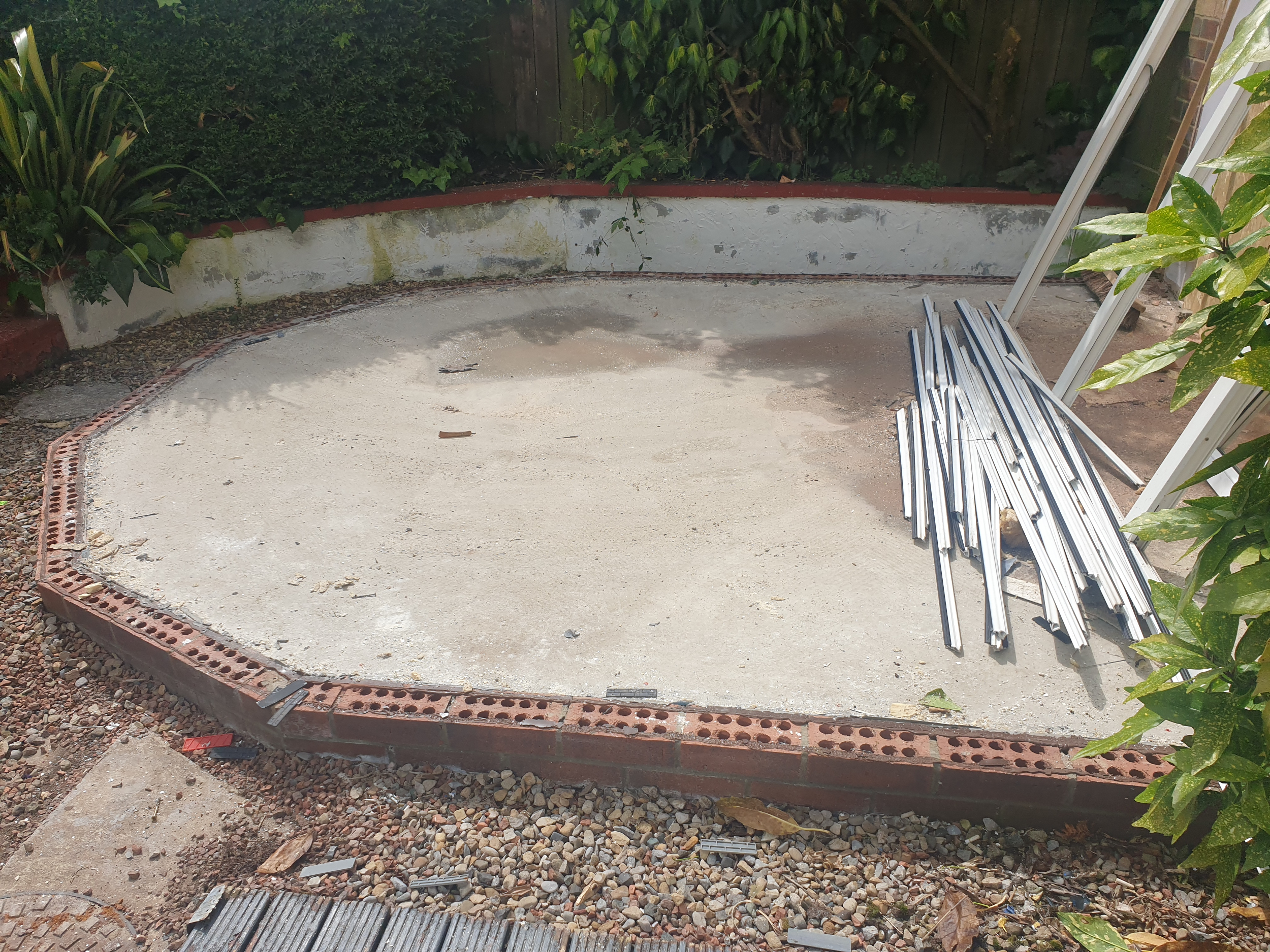
I apologise to anyone who has had to sit through an online meeting with me over the last few weeks. We’ve been getting some building work done on the house, with a lot of banging and drilling, making it quite difficult, at times, to be an active participant. Since COVID, this has been a regular thing, not for me but for others. It seems that in nearly every call someone is getting something done or expecting a delivery. It is just the way things are these days.
It’s only a small piece of work but I think this will be the last for us. I just can’t handle the way that the house is turned upside down and the regular rearranging of my life. First world problems indeed.
We had a conservatory, or garden room, attached to the house about 30 years ago. I don’t think it was ever built properly in the first place but the flat roof had sagged, it was damp and occasionally plagued with woodlice. It is coming down to be replaced with something smaller, warmer, dryer and with a sloping roof. There will be no more standing on the roof trying to brush off the water for me.
It has been a tense time in the Jackman household with the chopping and changing of the plans due to some unforeseen although perhaps should have been foreseen issues. The whole thing has left me just wanting it to be over and to be able to get back to some sort of normality.
There are three things that the demolition and build have reminded me about dealing with customers. Firstly, if you are going to provide a quote then you need to estimate properly. The demolition has been far bigger and more difficult than they imagined. The amount of resources sent was inadequate for the job in hand. Bad estimating leads to poor customer relations, poor staff morale and cost overruns.
This leads nicely into the second reminder. Always give yourself some wiggle room. Things will inevitably go wrong with any build, materials don;t arrive in time, staff go off sick or the weather gets in the way. It’s always better to come back to the customer to say you can do it sooner if they want than putting things back (see point one).
Finally, communication is key. At all stages it is management’s responsibility to communicate with the customer. Bad news is best told straight away even if you have to feel the sharp end of the customer’s tongue for a few minutes, it pays off in the long run. Keeping the client up to date should not be the responsibility of the people on the ground, especially if it is bad news. Such things are the responsibility of the people who are paid to manage these things.
Perhaps there is a fourth and that is those people who manage crews should have at least a smattering of an understanding of what they are facing.
Everyday is a school day as they say. Hopefully it will all be over soon.
 Thoughts from a Guerrilla Worker